What we're working with: the 1990s honey-oak kitchen
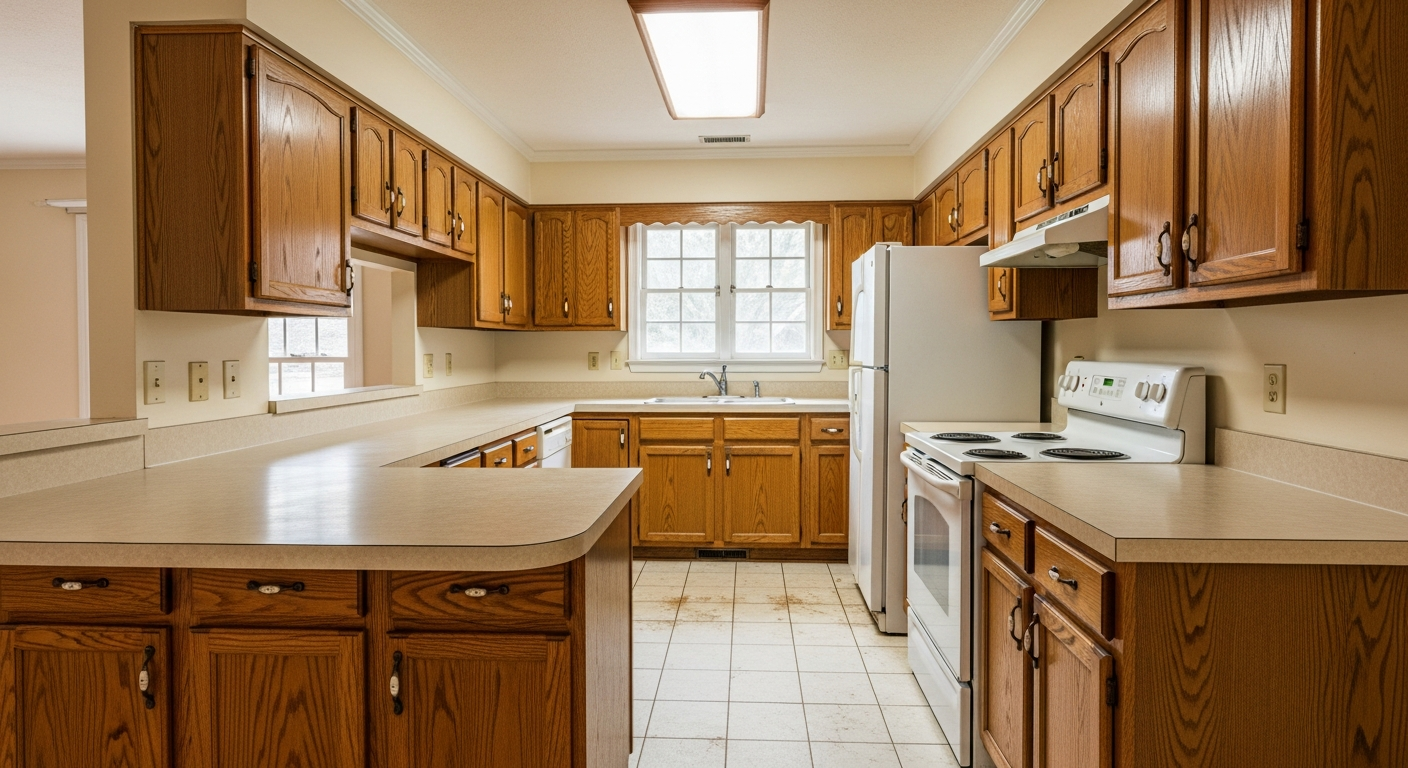
The typical 1990s suburban Atlanta kitchen presents with a galley-plus-island layout, honey-oak raised-panel cabinets, brass cup pulls, beige laminate countertops, off-white 4×4 ceramic tile floors, a fluorescent box light centered over the island, and a white builder-grade appliance package. Cabinet boxes are usually solid plywood or particle board with oak veneer—structurally intact but cosmetically dead. Counters are 1.5-inch post-form laminate with integrated backsplash, functional but optically cheap. The tile floor is often laid over original oak hardwood, which means there's value underneath if someone bothered to preserve it during the 1995 flip.
The layout itself is rarely the problem. Galley-plus-island configurations from this era were competently designed—work triangle holds, clearances meet code, plumbing and electrical rough-in are where they should be. The island is usually 42 inches wide, which is narrow by 2026 standards but perfectly usable. The problem is pure aesthetics: honey oak reads as rental-grade to today's buyer, brass hardware is a visual liability, and laminate counters signal deferred maintenance even when they're intact. Cabinet boxes are fine. The doors and drawer fronts are what's killing the sale.
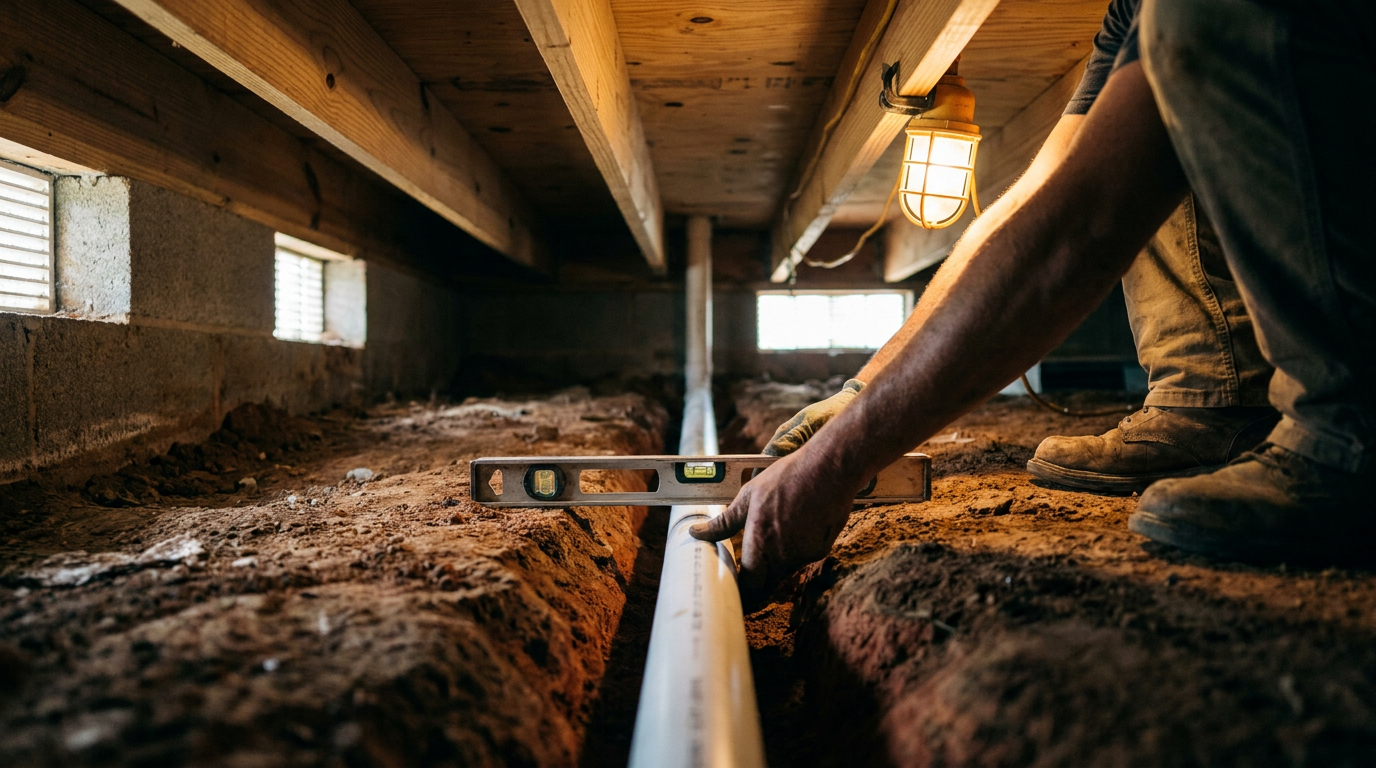
Structural elements worth noting: if the original oak hardwood is under that tile, it's almost certainly 3/4-inch solid oak, laid in 1989-1992 before the engineered-floor takeover. Cabinet boxes are face-frame construction with full-depth shelves, not the 18-inch Euro-box garbage that came later. The sink base is usually 36 inches, which means a 33-inch undermount will drop in without modification. Electrical is likely 20-amp circuits for the range and microwave, adequate for a modern induction cooktop but marginal for a double wall oven. Plumbing is copper or CPVC, functional but worth inspecting before committing to an undermount sink that stresses the supply lines.
Style direction: modern transitional
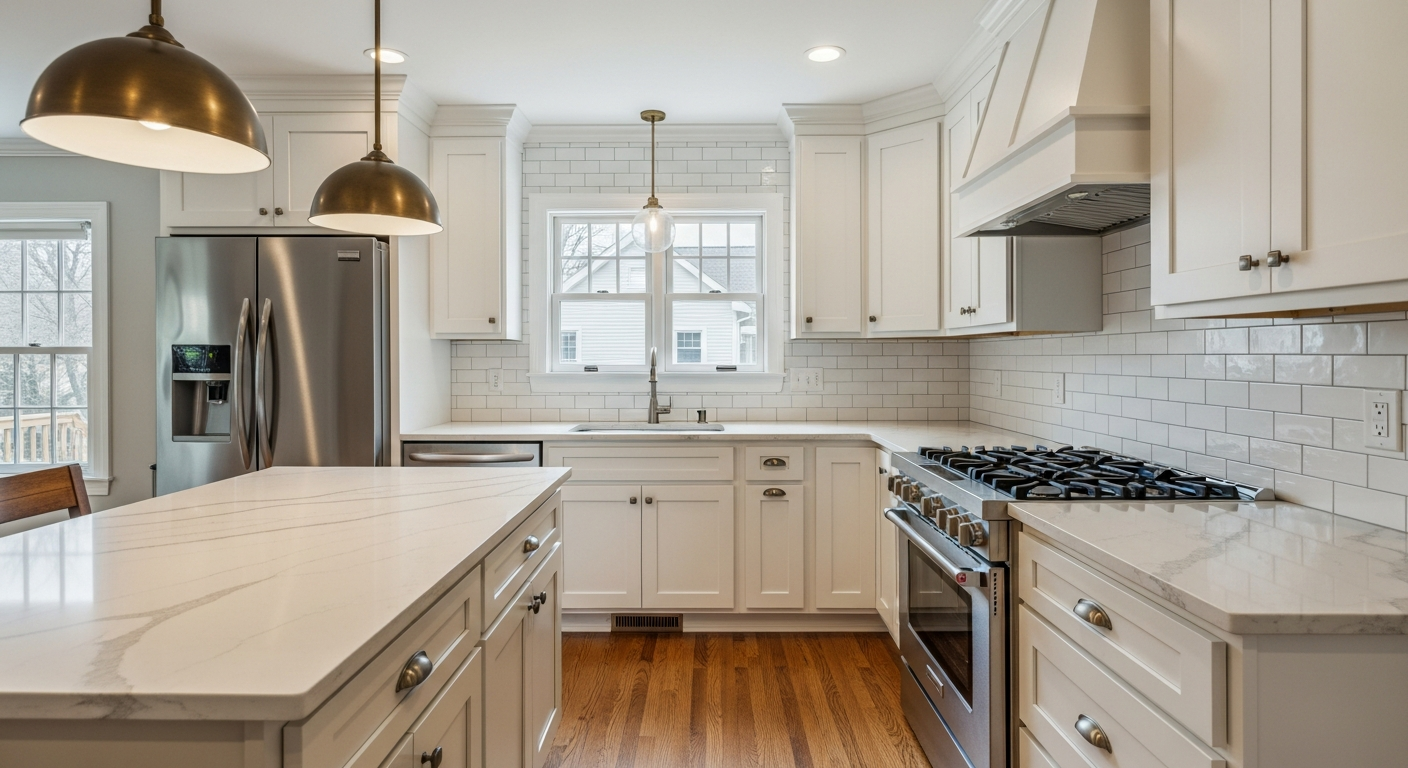
Modern transitional means Cloud White shaker doors on the existing cabinet boxes, 3-inch quartz counters in Carrara-look or solid white, 3×6 white subway tile backsplash in offset brick pattern, brushed brass or champagne bronze hardware (bin pulls on drawers, knobs on doors), and refinished oak floors left natural or stained in medium walnut. Lighting shifts from fluorescent box to three 10-inch brass dome pendants over the island, plus under-cabinet LED strips for task lighting. Appliances upgrade to a stainless steel package: 30-inch gas or induction range, 24-inch dishwasher, French-door refrigerator, and microwave relocated to a trim kit above the range if wall space allows.
The visual goal is bright, clean, and structurally honest—no attempt to fake a chef's kitchen or a European farmhouse. Subway tile is the safe play because it's optically neutral and won't look dated in five years. Quartz counters avoid the maintenance trap of marble and the cheap-motel associations of granite. Brass hardware and pendants add warmth without committing to a trend. Refinished oak floors ground the space and avoid the flooring-budget trap that kills so many kitchen projects. The result should photograph well, show well, and pass the buyer's mother-in-law test without generating objections.
Cost breakdown — Atlanta MSA, mid-2026
| Line Item | Cost |
|---|---|
| Refinish cabinet boxes + new shaker doors/drawer fronts | $8,500 |
| Quartz countertops (3cm, undermount sink cutout, 35 lin ft) | $5,200 |
| Subway tile backsplash (50 sq ft, labor + materials) | $2,000 |
| Cabinet hardware (20 pulls + 10 knobs, brushed brass) | $400 |
| Refinish existing oak hardwood floors (150 sq ft) | $2,800 |
| Stainless appliance package (range, dishwasher, refrigerator, microwave) | $5,500 |
| Plumbing + electrical modifications (undermount sink, pendant rough-in) | $2,500 |
| Lighting (3 brass dome pendants + under-cabinet LED strips) | $1,200 |
| Paint (walls, ceiling, trim in Sherwin-Williams Alabaster) | $1,500 |
| Contractor markup + 10% contingency | $7,400 |
| Total | $37,000 |
Beckett Real Estate's construction-eye notes
What to KEEP: the layout, the cabinet boxes if they're solid plywood or quality particle board with oak veneer, the original oak hardwood under the tile, the existing electrical circuits if they're 20-amp, and the plumbing rough-in if copper or CPVC is intact. Galley-plus-island layouts from the 1990s are dimensionally sound—moving walls or relocating plumbing adds $15,000-$25,000 to the budget without improving function. Cabinet boxes from this era are often better-built than what's available today at the same price point. Refinishing them and swapping doors is a $8,500 play versus $18,000-$25,000 for full replacement. The oak hardwood under the tile is worth the $1,200 demo cost because it's 3/4-inch solid oak that will outlast engineered flooring and photograph better than luxury vinyl plank.
What to GUT: cabinet doors and drawer fronts (the honey oak is optically dead), laminate countertops (beige laminate with integrated backsplash signals rental-grade), the fluorescent box light (it's a visual anchor that drags down every listing photo), the white builder-grade appliances (they're the first thing buyers notice and the last thing they'll overlook), and the 4×4 tile floor if it's not hiding hardwood. Cabinet doors can be replaced without touching the boxes—most cabinet shops will measure, build, and hang new shaker doors for $120-$180 per door including soft-close hinges. Laminate counters come up with a pry bar and a reciprocating saw, no demo permit required unless the layout shifts. Fluorescent fixtures unscrew in ten minutes. The appliance package is non-negotiable because buyers in the $400K-$550K range expect stainless, and mismatched finishes (stainless range with white dishwasher) read as deferred maintenance.
What's the TRAP: blowing $12,000 on exotic stone counters while leaving the cabinet boxes untouched, skipping the appliance package and trying to match stainless finishes later (manufacturers discontinue models every 18 months and the handles never match), not pulling a permit when the layout shifts even one inch (inspectors will flag unpermitted work during a buyer's due diligence, and the deal dies), and refinishing the cabinet boxes but reusing the old brass hardware (new shaker doors with 1995 brass cup pulls is a tell that the budget ran out). The biggest trap is ignoring the flooring—if the original oak is under that tile, pulling it is a $1,200-$1,500 line item that yields $4,000-$5,000 in perceived value. If it's not there, luxury vinyl plank is the fallback, not ceramic tile. Tile floors in kitchens are cold, loud, and optically dated unless they're large-format porcelain, which pushes the budget past $40,000.
Permit reality: Atlanta metro jurisdictions require permits for electrical modifications (adding circuits, relocating outlets) and plumbing changes (undermount sink installation if supply lines move). Cabinet refacing without layout changes does not require a permit. Countertop replacement does not require a permit. Appliance swaps do not require a permit unless gas lines are relocated. Flooring does not require a permit. The risk is DIY plumbing or electrical work that fails inspection during a buyer's due diligence—inspectors will call out unpermitted modifications, and the deal either renegotiates or dies. The $400 permit cost is insurance against a $15,000 rework demand from a buyer's attorney.
Home value impact
According to Remodeling Magazine's 2024 Cost vs. Value Report for the Atlanta MSA, a midrange minor kitchen remodel recoups approximately 74% of cost at resale. A $37,000 investment yields roughly $27,400 in added home value at the appraisal level, which means a $9,600 gap between cost and recovery. The bigger win is not the appraisal bump—it's qualifying for the next buyer tier. A home priced at $425,000 with a tired 1990s kitchen will sit for 60-90 days and attract offers from buyers expecting a $15,000-$20,000 credit at closing. The same home with a modern transitional kitchen priced at $450,000 will move in 14-21 days and attract offers from buyers who expect an updated kitchen and will not write an offer on a rental-grade one. The $37,000 spend is not about ROI—it's about eliminating the buyer objection that kills the deal before it starts.
For an honest opinion and a realistic evaluation, contact Beckett Real Estate. Call Evan now: 866-578-8917 or schedule a free consultation.