What we're working with: the 1990s brass-fixture bathroom
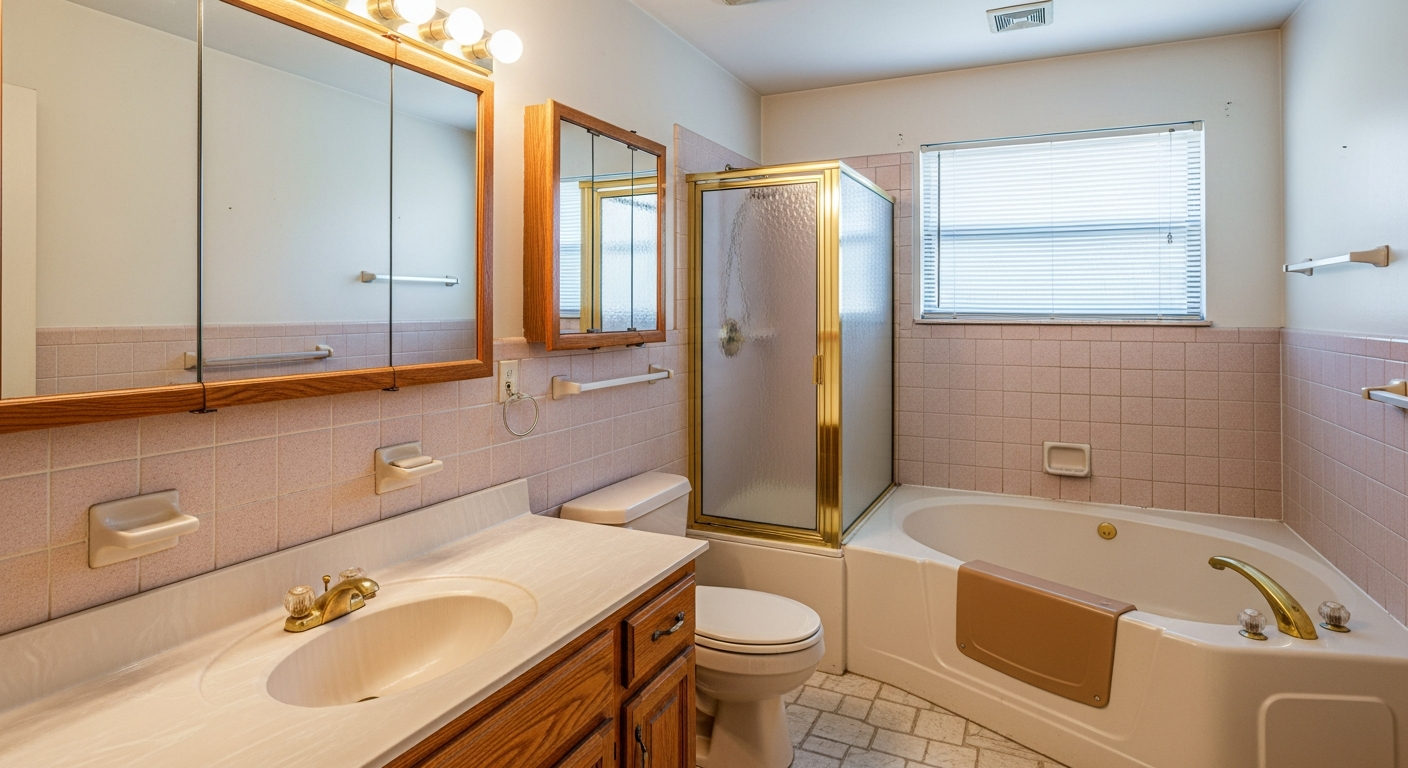
The 1990s suburban Atlanta primary bathroom speaks a very particular dialect—polished brass everywhere, oak vanity with the cultured-marble top molded into the sink, pink-beige 6×6 ceramic tile climbing four feet up the walls, an oval garden tub platform-mounted in the corner, a brass-framed sliding shower door over a fiberglass base, vinyl plank flooring, and the inevitable Hollywood vanity light bar with five or six frosted globes. Beckett Real Estate sees these bathrooms constantly—usually original, rarely updated, almost always on the seller's mental list of 'should we fix this before listing?'
From a construction standpoint, the good news: plumbing rough-in is typically sound—copper supply lines haven't leaked, ABS drains still drain, and exhaust ducting is oversized 4-inch PVC that'll accommodate any modern fan upgrade. The bad news: aesthetically, there's nothing salvageable. The cultured-marble top is a single-piece integrated sink that cracks if you try to swap hardware, the brass finish has oxidized into a dull amber no polish will rescue, and that 6×6 tile was grouted with sanded compound that's now hosting twenty years of soap residue in the joints.
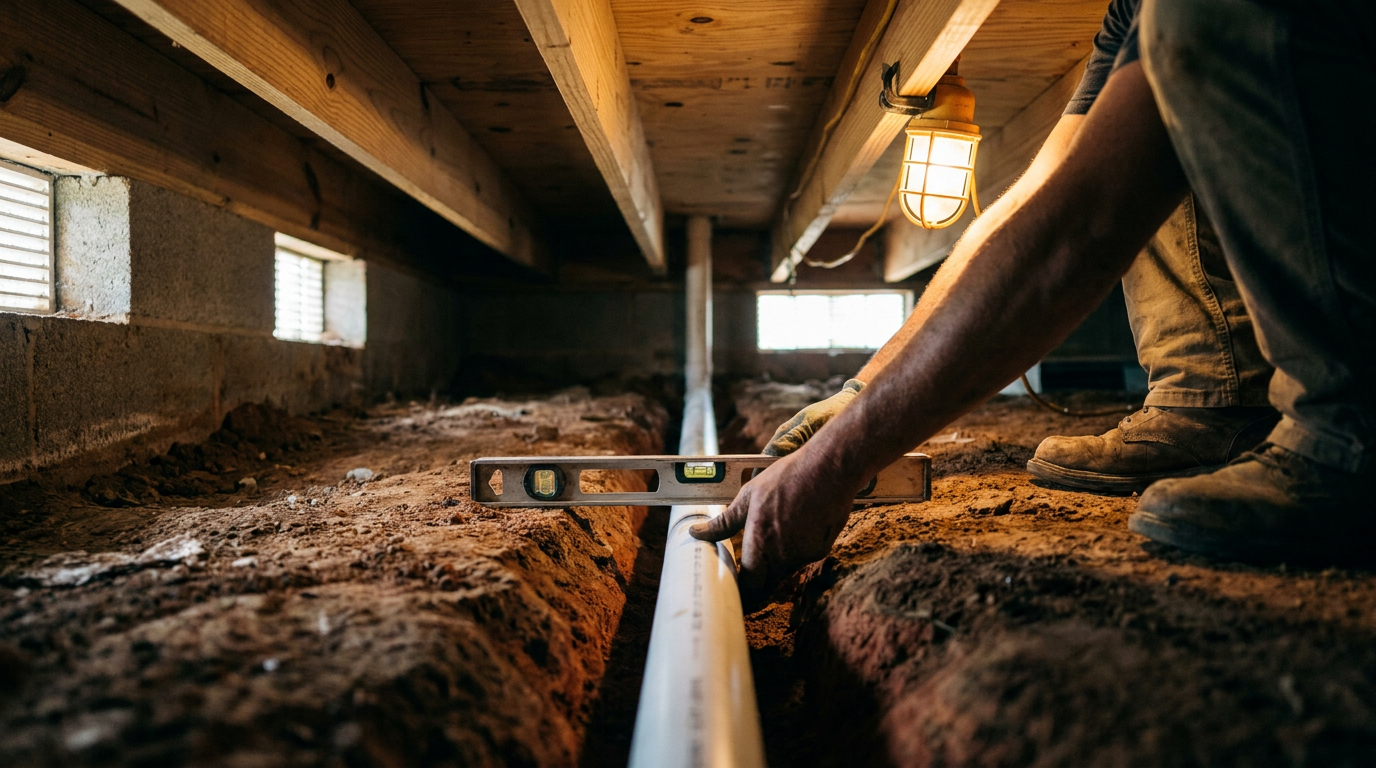
The structural trap hiding here? That platform garden tub—90% of the time it's dropped into a site-built frame over standard joist spacing. If the redesign calls for a freestanding soaking tub (which weighs 900 pounds filled), the subfloor may need sistered joists or blocking unless the original builder over-engineered the platform. Beckett Real Estate measures twice before specifying anything freestanding—expensive change orders start with assumptions about what's under the vinyl.
Style direction: modern luxe spa
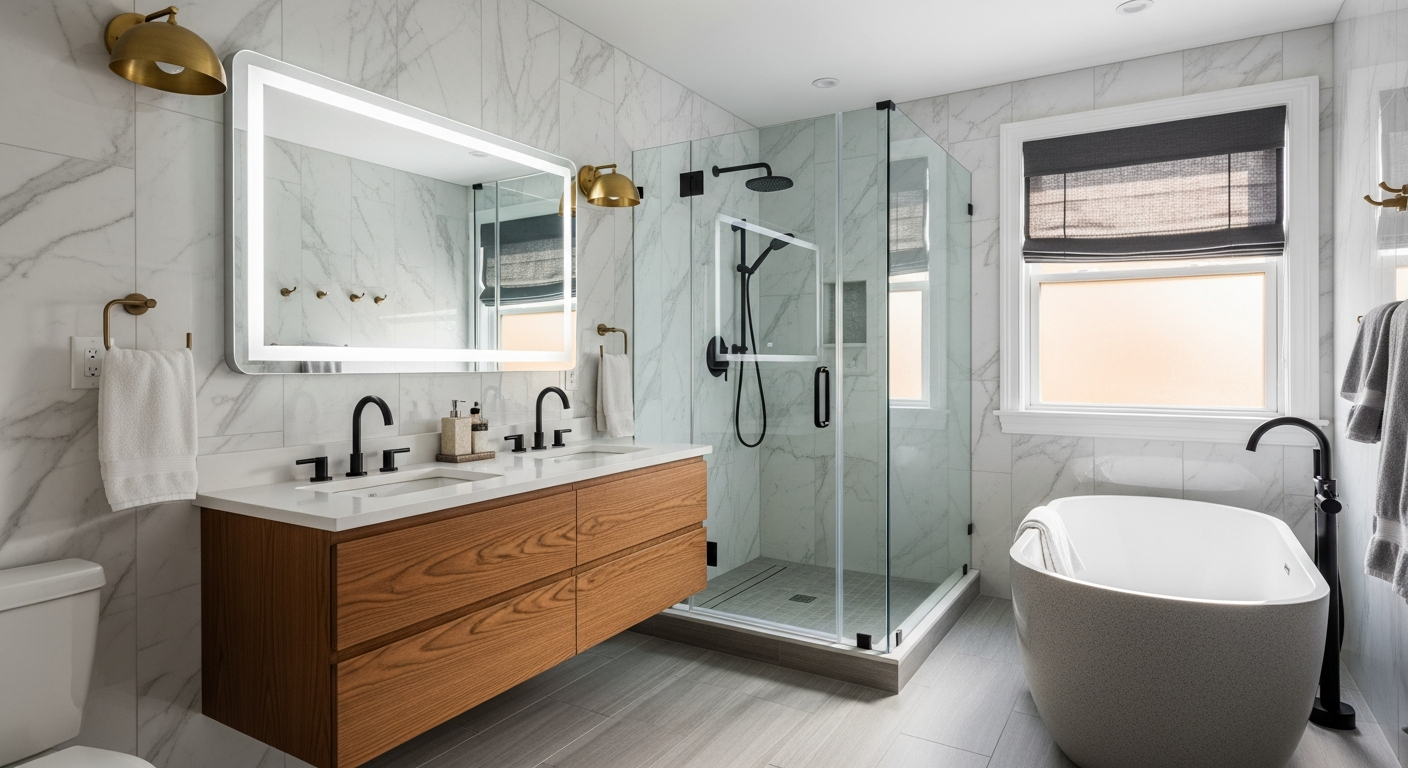
The redesign moves toward quiet luxury: walnut floating double vanity with concealed soft-close drawers, honed quartz top in warm white, matte black faucets and cabinet hardware, vertical 12×24 Carrara-look porcelain tile from floor to ceiling, frameless walk-in shower with linear drain and rain head, freestanding acrylic soaking tub positioned as the room's focal point, and brass dome sconces flanking the mirrors. Every finish reads spa-grade—honed not polished, matte not shiny, walnut not oak, monochrome not peach.
The layout strategy: eliminate the platform tub alcove, open up the shower footprint to 48 inches wide, float the vanity to create visual breathing room, and anchor the freestanding tub under the window with a view of the hardware as sculpture. Beckett Real Estate leans into the 'hotel suite' spatial cue—nothing built-in except the shower enclosure, everything else furniture-grade or elevated. The transformation isn't about adding square footage; it's about subtracting visual clutter and replacing builder-grade with something buyers pause to photograph during the tour.
Cost breakdown—Atlanta MSA, mid-2026
| Line Item | Cost |
|---|---|
| Vanity + quartz counter | $4,200 |
| Tile (walls + floor) | $5,800 |
| Freestanding tub | $1,800 |
| Frameless shower glass + trim | $2,200 |
| Faucets + fixtures (vanity, shower, tub fill) | $1,400 |
| Lighting (sconces + recessed) | $800 |
| Plumbing rough-in modifications | $2,400 |
| Waterproofing membrane + shower system | $1,200 |
| Painting + finish carpentry | $900 |
| Labor + contractor markup + contingency | $4,300 |
| TOTAL | $25,000 |
Beckett Real Estate's construction-eye notes
What to KEEP: Rough plumbing locations if the drain and supply lines are sound—moving a toilet flange or tub drain adds $800–$1,200 in slab work or joist drilling that delivers zero design value. If the existing exhaust vent is 4-inch ducting to the roof (common in late-90s builds), keep the run and upgrade only the fan unit. If there's a double-gang electrical box for the vanity lights, reuse the location for the new sconces. Every reused rough-in point is budget freed up for finish-grade materials.
What to GUT: Everything aesthetic. The cultured-marble top can't be retrofitted—it's a single thermoformed piece, and any attempt to drill new faucet holes results in spiderweb cracks. The oak vanity is particle-board core with veneer; it won't survive removal intact. The 6×6 tile has to go—no amount of regrout makes small-format tile read modern, and the mastic adhesive underneath is likely not waterproof by 2026 code. The vinyl flooring, the brass shower frame, the garden tub, the light bar—demo day takes all of it. Beckett Real Estate's rule: if it's finish surface or trim, it's leaving the job site in a dumpster bag.
What's the TRAP: Three landmines. First, forgetting the moisture barrier—modern code requires waterproof membrane behind all wet-area tile, and inspectors in metro Atlanta are checking for it. Skipping it to save $600 means failing inspection or worse, long-term mold. Second, choosing tile too large for the substrate—12×24 porcelain requires perfectly flat walls and 1/8-inch maximum lippage; if the drywall is wavy or the studs are bowed, large-format tile telegraphs every flaw. Third, setting a freestanding tub over a floor framed for a lightweight fiberglass unit—without sistered joists or blocking, that tub will flex and crack grout lines within six months. Beckett Real Estate measures joist spans and calculates load before specifying anything over 400 pounds full.
The fourth trap, specific to this archetype: assuming the garden tub platform is structural. Often it's just 2×4 framing skinned with drywall—it's not load-bearing, and demoing it doesn't require a beam. But contractors unfamiliar with 90s construction sometimes overbid the teardown, assuming complicated structural work. Beckett Real Estate knows what's behind the tile: almost always just air and opportunity.
Home value impact
According to Remodeling Magazine's 2024 Cost vs. Value report for the Atlanta MSA, a midrange bathroom remodel recoups approximately 67% at resale—$25,000 invested returns roughly $16,750 in added home value. But the real ROI isn't in the appraisal comp; it's in buyer behavior. Bathrooms move decisions emotionally. A spa-finished primary bath signals 'this house is move-in ready'—it removes the buyer's mental to-do list and converts the showing into an offer. Beckett Real Estate tracks this across hundreds of listings: homes with updated primary baths spend 40% less time on market than identical comps with original 90s finishes, and they close at ask or above more consistently. The $25K isn't buying marble and brass; it's buying the buyer's certainty that the previous owner cared about quality, which translates directly into competitive offers and faster escrow.
For an honest opinion and a realistic evaluation, contact Beckett Real Estate. Call Evan now: 866-578-8917 or schedule a free consultation.